
Are You Running Towards or Away from a Cold?
The role of exercise in immunity

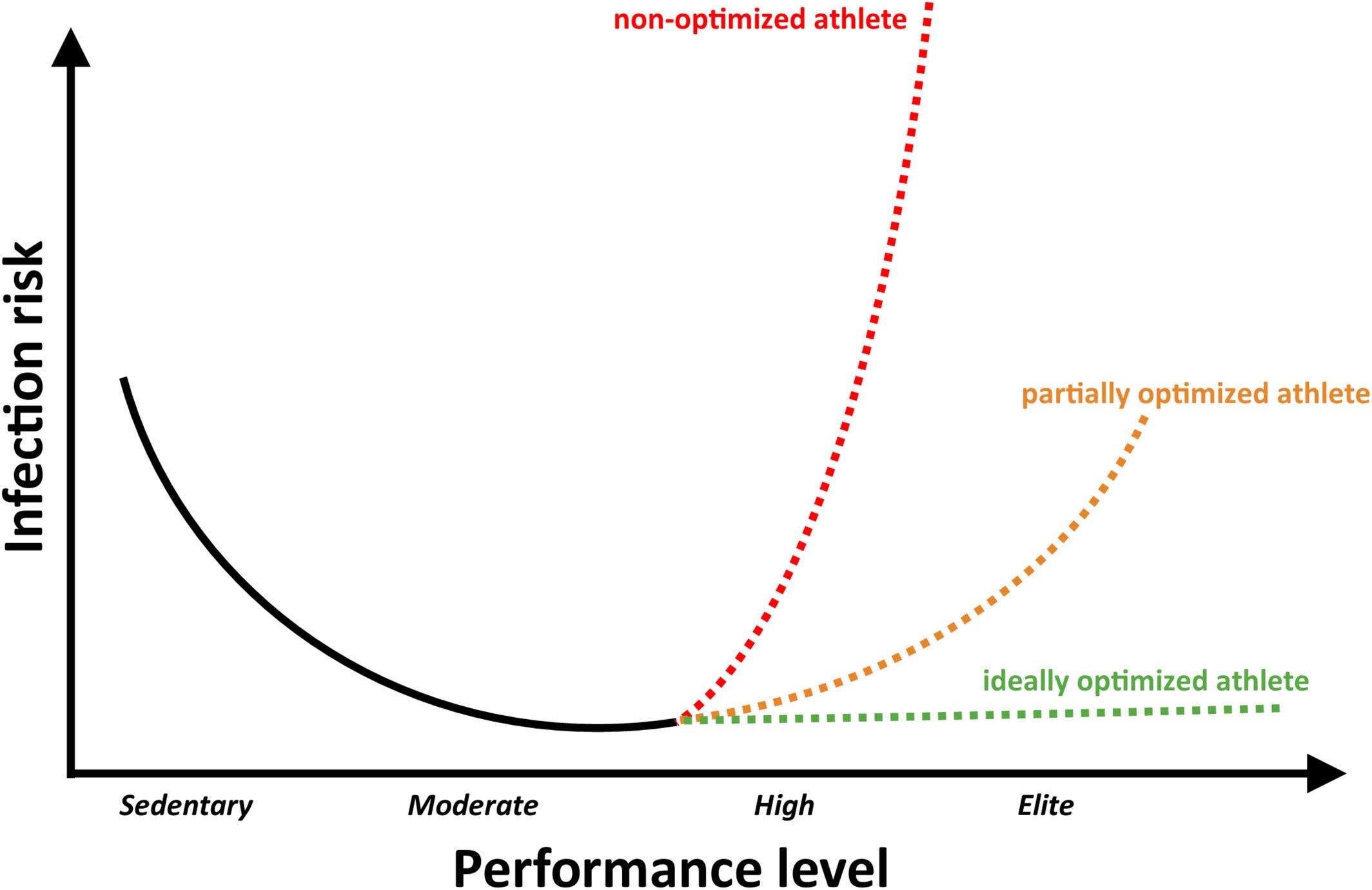
When in medical school and sitting exams regularly, you get good at sitting exams as well as answering questions without necessarily having been exposed to the topic content specifically. What do I mean? Well you learn how to reason your way through things, recognise patterns and use first principles derivation to get an answer. As a result, you start to develop rules of thumb an example I often used is when asked about risk factors for a specific cancer, the answer was usually not using that organ for what it was designed for; breast feeding is protective for breast cancer, child bearing for uterine cancer etc etc. On a similar note, you also banked some risk factors that were almost universally an issue for example smoking pretty much caused everything bad (though in a quirky situation seems to reduce the risk of ulcerative colitis). And then we land on exercise, which pretty much is good for everything almost all of the time. This includes the immune system, where the prevailing wisdom is that exercise meant less sick days, less infection and quicker recoveries (from illness, injury and the rest). That said, famously there seemed to be a ‘J shaped’ relationship where excessive exercise reduced immunity/increased infection risk after initially reducing it (hence the J), with endurance athletes often seeing evidence of this as they fell ill around big events.
But a recent review paper has got me questioning this conventional wisdom.
What is the Role of the Immune System?
The immune system is effective both a surveillance system and army concurrently. It’s constantly vigilant for foreign objects (term used intentionally, more to come) so that it can mobilise resources to destroy or wall off the offender. When most people read that, they probably think of viruses, bacteria and perhaps even things like pollen, which are all great examples. But there are more examples yet such foreign tissue (hence we use immunosuppressants in organ transplants) which includes blood (hence we crossmatch blood types) and truly foreign objects like splinters (which get walled off).
What many don’t think of, or know about, with respect to the immune system is it’s role in recovery from both injury and insult. That’s right, it’s a multi-potent system, which uses similar resources to achieve many results (the body has evolved to not be wasteful).
“The involvement of the immune system in the normal physiological recovery from acute exercise is frequently overlooked as one of its core competences.” - Reitzner & Brodin 2026
Vaccination
Whilst this has somehow become a controversial and hot topic, it’s worth mentioning that the fundamental principle of vaccination is a great example of how the immune system works. In short, we show (via the vaccine) the immune system something foreign so that it recognises it in the future and has a response ready to go, thus allowing it to better fight off the issue later.
*there’s a bit of complexity between what are called innate and adaptive immunity that we won’t go into as it’s beyond the bounds of this, but you can read up on it using those terms. In short; innate immunity protects against everything, non-specifically, adaptive immunity is about recognising something previously encountered and responding more specifically to that (vaccination is about training the adaptive immune response).
Interestingly, relatively recent research provides some evidence that light to moderate exercise prior to vaccination may enhance antibody responses, which looks to be enhanced with age. Of course, there’s some risk of side effects, but these look to be relatively mild (mildly increased pain post injection). I certainly wouldn’t recommend a huge increase from normal exercise (or lack thereof) pre-vaccination, but I would suggest relatively normal exercise (unless fairly exhaustive) is probably not harmful, if not indeed helpful to the vaccination following it.
*Consult your medical team, this is not medical advice
Thanks to Stryd for their support of this newsletter. I have been using their running power meters for years and I’ve found the data to be very insightful from a mechanical loading perspective as I covered here in both health and performance contexts.
Please do follow the link to help support both them and this work.

What Happens to the Immune System When we Exercise?
If we know that the immune system is ‘improved’ by exercise and we know it has a role to play in recovery from exercise, the question is what’s going on - let’s dive in.
Acutely, the blood pressure changes and release of stress hormones by exercise (remember, the body is efficient and smart - there are many common pathways) mean that immune cells are mobilised to the periphery ready to fight off whatever may come their way (or indeed aid in recovery post exercise). Remember, evolutionarily this sort of signal would mean there was a good chance an insult was coming (hunting, fighting, etc) we weren’t getting stressful emails and running on treadmills. Astute readers would have intuited that because physiology is more of a dimmer switch than an on/off switch, these changes/responses are intensity dependent to a degree.
Additionally there is release of pro-inflammatory cytokines (chemical messengers) as a result of exercise, followed by a release of anti-inflammatory cytokines later. This is part of why use of antioxidants, ice baths, anti-inflammatories etc directly after exercise can blunt some of the stimulus (because it is derived from inflammatory cytokines) as I covered recently here.
In researching this article I found that one of the first ever studies into immune responses to exercise was in 1902! Interestingly, it looked at leukocyte (one of your white blood cells) count changes before and after running a marathon. As seems to be the case for other early research it was actually the Boston marathon of all places. But the reason I bring this up, beyond the fact it’s fascinating how long ago that was, is the name of the paper: “Leucocytosis After Violent Exercise” (it’s great right?!)
More chronically, the article suggests that the repeated exposure to exercise as a stimulus can cause a shifting of the baseline status of the immune system. Longer term readers will remember I discussed this type of phenomenon, whereby chronically stressing a system to a low level creates an increase in resilience, known as hormesis. This shift includes a reduction in background inflammatory signals, which is probably why exercise helps chronic inflammatory conditions at least symptomatically.
Interestingly, there are also some indications that suggest immune cells increase their mitochondrial content in response to chronic endurance exercise. This is important on a few fronts; it speaks to the importance of energy in immunity (we will come back to this) and suggests that high level athletes may have a different immune cell phenotype.
What About Overdoing it?
There is certainly research suggesting that during periods of excessive exercise/training, ie overtraining, there can be an impairment in function of white blood cells (and these are your immune cells). But it’s important to note this is not the same as chronic high levels of exercise, this is excessive (and often paired with other factors like poor sleep, psychological stress and/or low energy availability).
Fun Fact (well, not so fun actually), there are people who are truly allergic to exercise. Some of whom have anaphylactic reactions to it potentially, including a friend of mine during medical school.
A Resource Allocation Problem
As mentioned in the introduction, the conventional thinking was that there was an increased susceptibility for infections in higher level endurance athletes in part due to a level of immunosuppression (hence the ‘J shaped relationship). Authors of the review article which I have based this much of this piece off call this into question (using research).
There is little debate that these athletes are more prone to getting infections, perhaps even more susceptible (the two things are slightly different) - the research supports this given their illness rates. The more pertinent question, which the authors discuss, is why. Many astute scientists and professionals have already cited other contributing factors, such as increased travel (for events) meaning being enclosed with large groups of people, and perhaps even moving large volumes of air whilst competing. Beyond these factors is what the body actually needs to mount an appropriate response. That’s right, as alluded to earlier on, the body needs energy to mount a response, something often not in abundance in athletes with higher training loads (they have both less time to eat and higher caloric needs). To go a level deeper, in a related factor, are the nutrient requirements, yes carbohydrates and protein are required but so a numerous micronutrients such as zinc. Authors also cite appropriate sleep, limited psychological stress and the other factors which, of course, apply more generally to the population.
The newer proposed model from authors is below.
Take Home Message
It’s quite hard to disentangle the web of factors that play a role in the propensity for those training large amounts to be sick more often, but the thought that excessive exercise as a sole factor impairs the immune system is probably not correct. The most likely scenario is that this line of thinking was due to the tools used and what we were able to measure.
That’s not to say that excessive exercise is consequence free, and of course just because it is not the exercise that is the main culprit doesn’t make the reality any different. Specifically, the exercise itself not playing a role doesn’t mean the confounders around it don’t (like underfueling or similar) which are hard to parse away from exercise in the real world.
References
Reitzner SM, Brodin P. The Immune System as a Biosensor of Health and Athletic Performance. Scand J Med Sci Sports. 2026 Mar;36(3):e70258. doi: 10.1111/sms.70258. PMID: 41842715; PMCID: PMC12994555.
J. Hallam, T. Jones, J. Alley, and M. L. Kohut, “Exercise After Influenza or COVID-19 Vaccination Increases Serum Antibody Without an Increase in Side Effects,” Brain, Behavior, and Immunity 102 (2022): 1–10, https://doi.org/10.1016/j.bbi.2022.02.005.
L. Barni, E. Carrasco-Vega, M. Olivieri, et al., “Does Physical Exercise Enhance the Immune Response After Vaccination? A Systematic Review for Clinical Indications of COVID-19 Vaccine,” International Journal of Environmental Research and Public Health 20, no. 6 (2023): 5183, https://doi.org/10.3390/ijerph20065183.
V. Y. Lee, R. Booy, S. R. Skinner, J. Fong, and K. M. Edwards, “The Effect of Exercise on Local and Systemic Adverse Reactions After Vaccinations – Outcomes of Two Randomized Controlled Trials,” Vaccine 36, no. 46 (2018): 6995–7002, https://doi.org/10.1016/j.vaccine.2018.09.067.
Contrepois K, Wu S, Moneghetti KJ, Hornburg D, Ahadi S, Tsai MS, Metwally AA, Wei E, Lee-McMullen B, Quijada JV, Chen S, Christle JW, Ellenberger M, Balliu B, Taylor S, Durrant MG, Knowles DA, Choudhry H, Ashland M, Bahmani A, Enslen B, Amsallem M, Kobayashi Y, Avina M, Perelman D, Schüssler-Fiorenza Rose SM, Zhou W, Ashley EA, Montgomery SB, Chaib H, Haddad F, Snyder MP. Molecular Choreography of Acute Exercise. Cell. 2020 May 28;181(5):1112-1130.e16. doi: 10.1016/j.cell.2020.04.043. PMID: 32470399; PMCID: PMC7299174.
Tayebi SM, Poorhabibi H, Heidary D, Amini MA, Sadeghi A. Impact of aerobic exercise on chronic inflammation in older adults: a systematic review and meta-analysis. BMC Sports Sci Med Rehabil. 2025 Aug 8;17(1):229. doi: 10.1186/s13102-025-01279-z. PMID: 40781686; PMCID: PMC12335091.
Beibei Luo, Dao Xiang, Xiaorong Ji, Xuan Chen, Rui Li, Shuxin Zhang, Yujun Meng, David C. Nieman, Peijie Chen, The anti-inflammatory effects of exercise on autoimmune diseases: A 20-year systematic review, Journal of Sport and Health Science, Volume 13, Issue 3, 2024, Pages 353-367, ISSN 2095-2546, https://doi.org/10.1016/j.jshs.2024.02.002.
B. Zong, F. Yu, X. Zhang, W. Zhao, S. Li, and L. Li, “Mechanisms Underlying the Beneficial Effects of Physical Exercise on Multiple Sclerosis: Focus on Immune Cells,” Frontiers in Immunology 14 (2023): 14, https://doi.org/10.3389/FIMMU.2023.1260663.
Sharif K, Watad A, Bragazzi NL, Lichtbroun M, Amital H, Shoenfeld Y. Physical activity and autoimmune diseases: Get moving and manage the disease. Autoimmun Rev. 2018 Jan;17(1):53-72. doi: 10.1016/j.autrev.2017.11.010. Epub 2017 Nov 3. PMID: 29108826.
F. R. Spinelli, R. Berti, G. Farina, F. Ceccarelli, F. Conti, and C. Crescioli, “Exercise-Induced Modulation of Interferon-Signature: A Therapeutic Route Toward Management of Systemic Lupus Erythematosus,” Autoimmunity Reviews 22, no. 10 (2023): 103412, https://doi.org/10.1016/J.AUTREV.2023.103412.
M. L. Lin, C. C. Hsu, T. C. Fu, Y. T. Lin, Y. C. Huang, and J. S. Wang, “Exercise Training Improves Mitochondrial Bioenergetics of Natural Killer Cells,” Medicine and Science in Sports and Exercise 54, no. 5 (2022): 751–760, https://doi.org/10.1249/MSS.0000000000002842.
J. R. Alley, R. J. Valentine, and M. L. Kohut, “Mitochondrial Mass of Naïve T Cells Is Associated With Aerobic Fitness and Energy Expenditure of Active and Inactive Adults,” Medicine and Science in Sports and Exercise 54, no. 8 (2022): 1288–1299, https://doi.org/10.1249/MSS.0000000000002914.
L. G. Minuzzi, H. Batatinha, C. Weyh, et al., “Natural Killer Cells From Endurance-Trained Older Adults Show Improved Functional and Metabolic Responses to Adrenergic Blockade and mTOR Inhibition,” Scientific Reports 15, no. 1 (2025): 25380, https://doi.org/10.1038/s41598-025-06057-y.
L. T. Mackinnon, “Special Feature for the Olympics: Effects of Exercise on the Immune System: Overtraining Effects on Immunity and Performance in Athletes,” Immunology and Cell Biology 78, no. 5 (2000): 502–509, https://doi.org/10.1111/J.1440-1711.2000.T01-7-.X.
D. B. Pyne, M. S. Baker, P. A. Fricker, W. A. McDonald, R. D. Telford, and M. J. Weidemann, “Effects of an Intensive 12-Wk Training Program by Elite Swimmers on Neutrophil Oxidative Activity,” Medicine and Science in Sports and Exercise 27, no. 4 (1995): 536–542
V. Hack, G. Strobel, M. Weiss, and H. Weicker, “PMN Cell Counts and Phagocytic Activity of Highly Trained Athletes Depend on Training Period,” Journal of Applied Physiology (1985) 77, no. 4 (1994): 1731–1735, https://doi.org/10.1152/JAPPL.1994.77.4.1731.
Love this. This works for me: drop intensity slightly, and volume significantly but get it done.